A Sahara desert trip is the highlight of most Morocco itineraries, but the version you book matters enormously. The same headline price can buy a relaxed crossing of the High Atlas and gorges or a punishing dash that leaves you on the dunes for barely an hour.
The single biggest decision is which desert: Merzouga and the tall dunes of Erg Chebbi, reached via Ouarzazate and the gorges, or Zagora and M'Hamid on the edge of remoter Erg Chigaga, reached down the Draa Valley. After that it comes down to how many days you can give the desert, and whether you want a group van, a private car, or your own wheels. This guide walks through the trade-offs so you can match a route to your trip.
Key facts
- Marrakech to Merzouga
- Roughly 8-9 hours of driving each way, via the High Atlas, Ouarzazate and the gorges.
- Fes to Merzouga
- About 470 km, a shorter drive of around 7-8 hours through the Middle Atlas and Ziz Valley.
- Erg Chebbi
- The tall, popular dunes at Merzouga; up to about 150 m high and spanning roughly 28 km.
- Erg Chigaga
- Lower but vast and remote dunes beyond M'Hamid, reached by 4x4 off-piste track.
- Classic tour
- A 3-day, 2-night Marrakech loop with one night in the desert camp.
- Best season
- Roughly October to April brings milder temperatures for camel treks and camping.
Merzouga or Zagora: which desert?
The two Sahara gateways offer genuinely different experiences. Merzouga / Erg Chebbi has the iconic postcard dunes, rising as much as roughly 150 metres above the surrounding plain and spanning some 28 km north to south. It is the more popular choice and, partly because of that, the better organised, with many permanent camps. The catch is distance: it sits far southeast, so a Marrakech round trip means long days in the car.
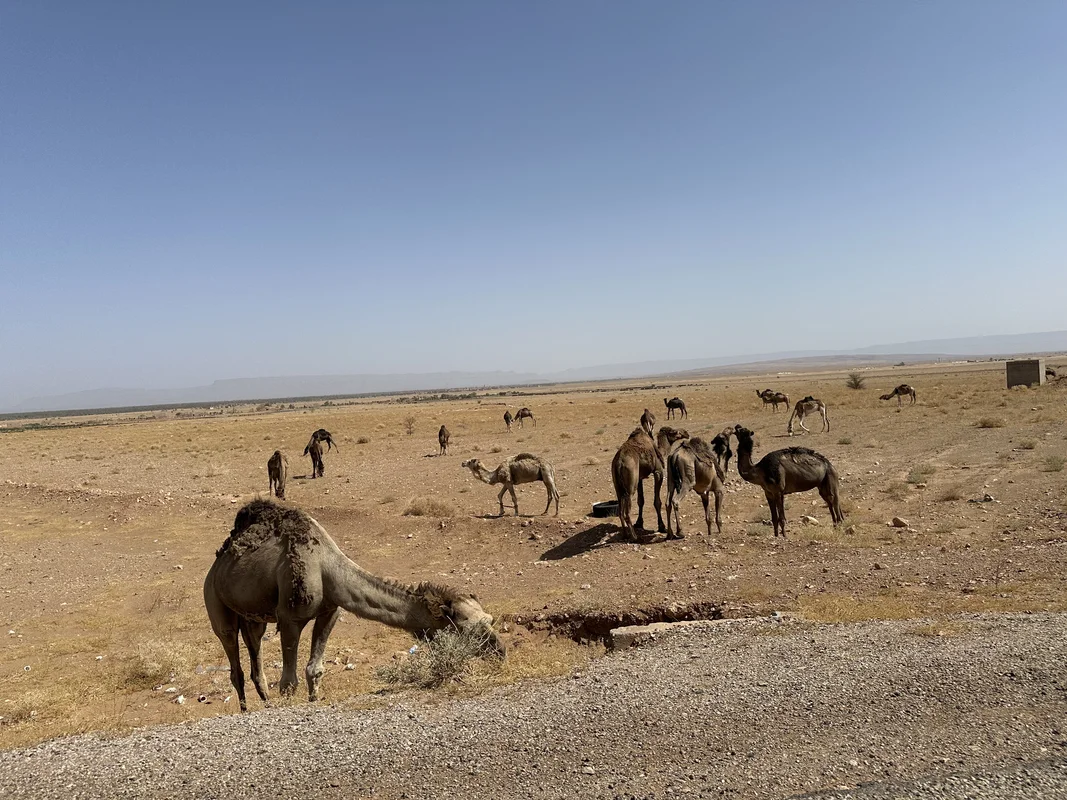
Zagora and M'Hamid, on the Draa Valley side, are closer to Marrakech and cheaper to reach. Note that camps marketed simply as "Zagora" often sit in rocky or low-dune desert rather than true sand seas. The real dunes here, Erg Chigaga, lie well beyond M'Hamid and require a 4x4 off-piste run, which makes them feel far more remote and far less crowded than Erg Chebbi.
The classic 3-day Marrakech loop
The most common tour is a 3-day, 2-night loop from Marrakech to Merzouga and back. A typical shape looks like this:
- Day 1: Cross the High Atlas via the Tizi n'Tichka pass, stop at Aït Benhaddou and Ouarzazate, then overnight around the Dades or Todra gorges.
- Day 2: Visit the gorge you didn't see, continue via Erfoud to Merzouga, then a sunset camel trek into the dunes and a night at a desert camp.
- Day 3: Sunrise over Erg Chebbi, then the long drive straight back to Marrakech.
It works, but day 3 is essentially one long haul. Even three days is tight for the distance involved.
Shorter and longer alternatives
If time is short, a 2-day Zagora trip from Marrakech is the quick option: down the Draa Valley, a night near Zagora, and back. It saves a day but the dunes are smaller and the desert time briefer, so manage expectations.
Going the other way, a 4 or 5-day route transforms the experience. The extra days let you slow down in the gorges, spend a full afternoon and morning on the dunes rather than rushing, and explore Rissani, Alnif or the rose and date valleys. Many longer tours run one-way and finish in Fes instead of returning to Marrakech, which removes the dreaded back-tracking day altogether.
Starting from Fes instead
Fes is the quietly smart starting point for Merzouga (see our full Fes to Merzouga guide). It sits roughly 470 km from the dunes, a drive of around seven to eight hours, noticeably shorter and less mountainous than the Marrakech approach. The route runs through the Middle Atlas cedar forests near Azrou, where Barbary macaques are often seen, and down the long, palm-lined Ziz Valley.
A popular plan is to travel one way: start in one city, spend the night in the desert, and end in the other. A Fes-to-Marrakech (or reverse) crossing via Merzouga packs in the Atlas, the gorges and the Sahara without repeating any ground, which is usually a better use of time than any there-and-back loop.
What a typical tour includes
Most multi-day desert tours bundle a fairly standard package, though always confirm the details before booking. Commonly included:
- Private or shared transport with a driver, often a Berber-speaking local who doubles as guide.
- Scenic stops at Aït Benhaddou, the gorges, and viewpoints along the way.
- A short camel trek into the dunes at sunset and back at sunrise.
- One night in a desert camp, ranging from basic to lavishly outfitted, usually with dinner, breakfast and sometimes live Berber music.
Lunches, drinks, tips and entry fees are often extra. Camps vary widely in comfort, so it pays to check exactly which camp tier you're getting.
Group vs private vs self-drive
Shared group tours in a minivan are the cheapest and a sociable way to travel, but you're tied to a fixed schedule and the group's pace, and pickups can eat into the morning.
Private tours with your own car and driver cost more but let you set departure times, linger where you like, and tailor the route. For families, small groups or anyone wanting flexibility, the per-person gap often narrows enough to be worthwhile.
Self-drive gives total freedom and works well as far as Merzouga town on good sealed roads. The catch is the final stretch into the dunes and especially the off-piste run to Erg Chigaga, which really needs a 4x4 and local knowledge; most self-drivers still hand off to a camp transfer for the sand itself.
How many days you really need (and booking tips)
Be honest about the geography. The desert is a long way from everywhere, so the most common mistake is the one-day-each-way trap, where two of three days are spent almost entirely in the car. If you can, give the trip four days, or do a one-way crossing so no driving is duplicated.
When booking, ask which specific camp you'll stay at and its comfort level, how long the camel trek actually lasts, whether the car is private or shared, and exactly which meals and fees are covered. Reputable operators answer these clearly. Booking a little ahead in the cooler high season helps, and it's worth checking the best time to visit before you lock in dates, since summer heat reshapes what's comfortable.