Morocco's desert south is one of the country's most welcoming regions, and most trips go smoothly. A few practical points, though, are different from the cities: distances are long, services are spread thin, the climate is extreme, and village life is conservative and close-knit.
These tips cover the essentials, from staying healthy in the heat to handling money, driving, photography and tipping. Pair them with our packing list and our guide to the best time to visit.
Key facts
- Safety
- The tourist areas of the south are generally considered safe; always check your government's current travel advice.
- Border
- The land border with Algeria is closed; do not approach border areas.
- Money
- Moroccan dirham; cash is king outside larger towns.
- ATMs
- In towns such as Ouarzazate, Zagora, Tinghir, Erfoud and Rissani.
- Water
- Bottled or filtered water is recommended for visitors.
- Driving
- Avoid night driving; carry your passport for routine checkpoints.
Is the Moroccan Sahara safe?
The main tourist areas of the southeast, including Merzouga, Zagora, M'Hamid and the Draa and Dadès valleys, receive large numbers of visitors and are generally considered safe. Petty crime is low compared with the big cities, and the most common annoyances are persistent touts and unofficial guides.
That said, conditions can change, so always check your own government's current travel advice before you go. The land border between Morocco and Algeria has been closed since 1994; never attempt to approach or cross it, and stay on recognised routes with a reputable guide when travelling off-road in border regions. Women travelling alone generally find the desert towns relaxed, though modest dress helps avoid unwanted attention.
Heat, sun and staying healthy
- Hydrate constantly. The dry air evaporates sweat quickly, so you can become dehydrated without noticing. Carry water and drink regularly, adding rehydration salts on hot days.
- Respect the midday sun. In the warmer months, plan activities for early morning and late afternoon, and rest in the shade in between.
- Cover up. A scarf or cheche, sunglasses, a hat and sunscreen are essential year-round.
- Drinking water: visitors are generally advised to drink bottled or filtered water. A refillable bottle with a filter reduces plastic waste.
- Food: freshly cooked, hot dishes such as tagine are usually a safe bet. Carry basic stomach remedies.
- Insurance: make sure your travel insurance covers activities like camel rides and 4x4 trips, and remote areas.
Money, ATMs and payments
The currency is the Moroccan dirham (MAD). It is a closed currency, so you generally obtain it once in Morocco, at airports, banks, exchange offices or ATMs. In the south, cash is essential: camps, small cafés, village shops and souks rarely accept cards. ATMs are found in larger towns such as Ouarzazate, Zagora, Tinghir, Erfoud and Rissani, but can occasionally run out of cash, so withdraw enough before heading to remote areas such as Oumjrane, M'Hamid or the dunes. Keep small notes and coins for tips and purchases.
Phones, internet and navigation
Mobile coverage is good in towns and along main roads, patchy in the mountains and often weak or absent deep in the dunes. A local SIM card with a data package is cheap and easy to buy with your passport in larger towns. Download offline maps before you set out, as well as anything you need for entertainment or stargazing apps. Some camps have Wi-Fi, but do not count on it.
Driving in the south
Self-driving is a great way to explore, and main roads are paved and generally good. Keep in mind:
- Avoid driving at night: unlit roads, pedestrians, livestock and unlit vehicles make it risky.
- Police checkpoints are routine. Slow down, be polite, and have your licence, passport and rental papers ready.
- Fuel up whenever you pass a station on long stretches like the road from Zagora to Merzouga.
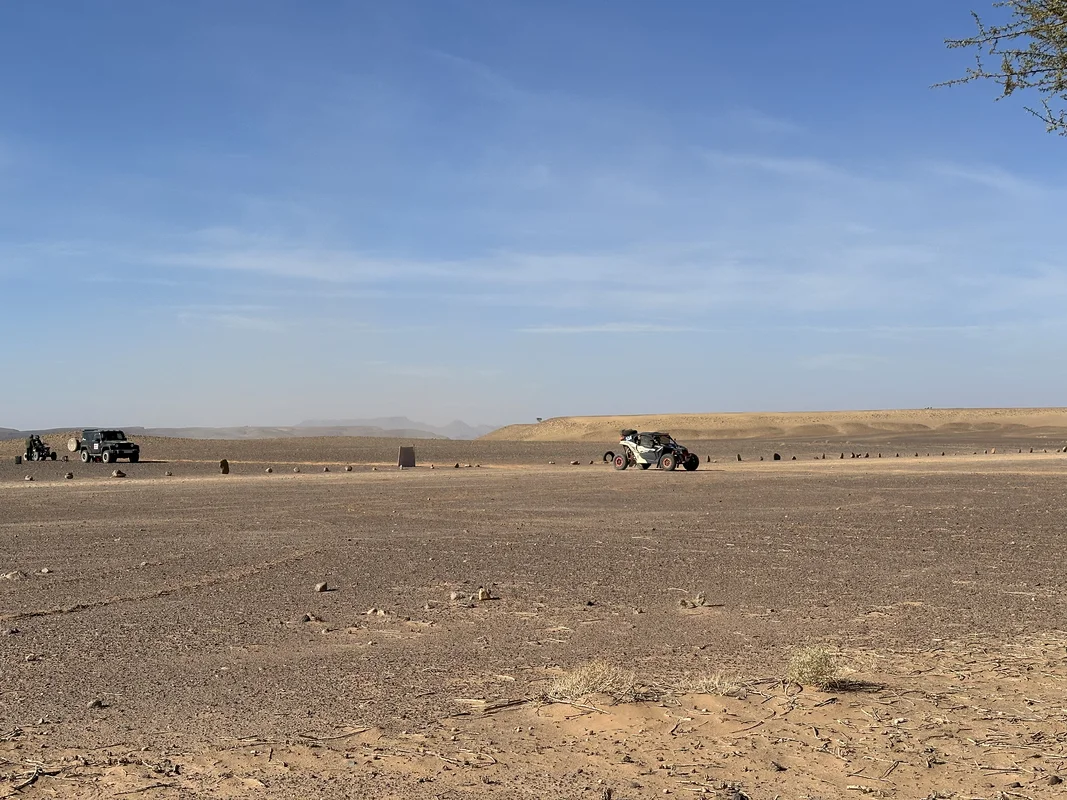
- Off-road driving in sand needs experience and the right vehicle; hire a local driver for trips to Erg Chigaga or remote pistes.
- Watch for drifting sand on the tarmac near the dunes, especially after windy days.
Guides, touts and booking
Using a guide is often a good idea in the desert, but choose carefully. Book camps, camel treks and tours through operators with consistent, recent reviews, and agree clearly on what is included (transport, meals, camel or 4x4, private or shared tent) before paying. On the road into some towns, you may be approached by unofficial guides offering to lead you to a hotel or camp; a firm, polite "no, thank you" is enough. See our guides to Sahara tours and camel trekking for more on choosing well.
Etiquette, photography and tipping
- Dress modestly in towns and villages, covering shoulders and knees.
- Ask before photographing people, especially women and older people; some will say no, and some may ask for a small payment. Respect their answer.
- Ramadan: if you travel during the month of fasting, avoid eating, drinking or smoking in public during daylight hours out of respect. Tourist services continue, but hours may change.
- Hospitality: accepting a glass of mint tea is a common courtesy. Our Amazigh culture guide explains more.
- Tipping is customary for guides, drivers, camel handlers and camp staff. Amounts are modest and at your discretion; a small envelope at the end of a trip is a common way to thank a team.
- Haggling is normal in souks. Keep it good-humoured and only negotiate if you intend to buy.
Leave no trace
The desert is fragile, and rubbish lasts for years in the dry climate. Carry your litter out, avoid single-use plastic where you can, do not chalk or touch rock art, and never buy fossils, plants or animals of questionable origin. Choosing local guides, staying in locally run guesthouses and buying crafts directly from artisans helps keep tourism income in desert communities.