Meals in the Moroccan desert are rarely elaborate, but they are among the most memorable of any trip. A tagine shared from a single dish in a tent among the dunes, warm bread from a clay oven, a handful of fresh dates and endless glasses of sweet mint tea: this is food shaped by the oasis and by a deep culture of hospitality.
This guide covers the dishes you are most likely to meet in the southeast, from Merzouga and Rissani to Zagora and the Anti-Atlas villages around Oumjrane, with a few tips on table manners.
Key facts
- Signature dish
- Madfouna, a stuffed flatbread often called "Berber pizza".
- Everyday staple
- Tagine, slow-cooked in a conical clay pot.
- Friday tradition
- Couscous, often shared with family after midday prayers.
- Oasis produce
- Dates, especially from the Tafilalet, the home of the Medjool variety.
- Drink
- Green mint tea, sweet and poured from a height.
- Etiquette
- Eat with your right hand, using bread to scoop from the shared dish.
Madfouna: the "Berber pizza"
The dish most associated with the Tafilalet, and especially with Rissani and the villages around Erg Chebbi, is madfouna, meaning "buried." It is a large round of bread dough filled with minced meat (or sometimes vegetables), onions, eggs, herbs and spices, folded and sealed, then baked, traditionally in a wood-fired oven or in hot embers and sand. The result is crisp outside and juicy inside, cut into wedges and shared. Visitors often call it "Berber pizza"; it is filling enough for a whole meal, and well worth seeking out.
Tagine and couscous
Tagine is the everyday dish of Morocco, named after the conical earthenware pot it is cooked in. Meat, chicken or vegetables simmer slowly with spices, olive oil and a little water, the cone returning the steam so that everything stays tender. In the desert you will often meet chicken with preserved lemon and olives, beef or lamb with prunes, kefta meatballs with eggs, and vegetable tagines, which are widely available for vegetarians.
Couscous, steamed semolina topped with vegetables and meat, is traditionally served on Fridays, when families gather after the midday prayer. Camps and guesthouses may serve it on other days too.
Soups, breads and breakfast
- Harira: a hearty tomato, lentil and chickpea soup, especially associated with breaking the fast during Ramadan.
- Khobz: round, flat bread eaten with almost every meal and used as a utensil.
- Msemen and baghrir: square, flaky pancakes and spongy semolina pancakes, typical at breakfast with honey, butter, jam or amlou.
- Desert breakfasts in camps usually include bread, eggs, olives, cheese, jam, dates and coffee or tea, often eaten while watching the sun climb over the dunes.
Dates and oasis produce
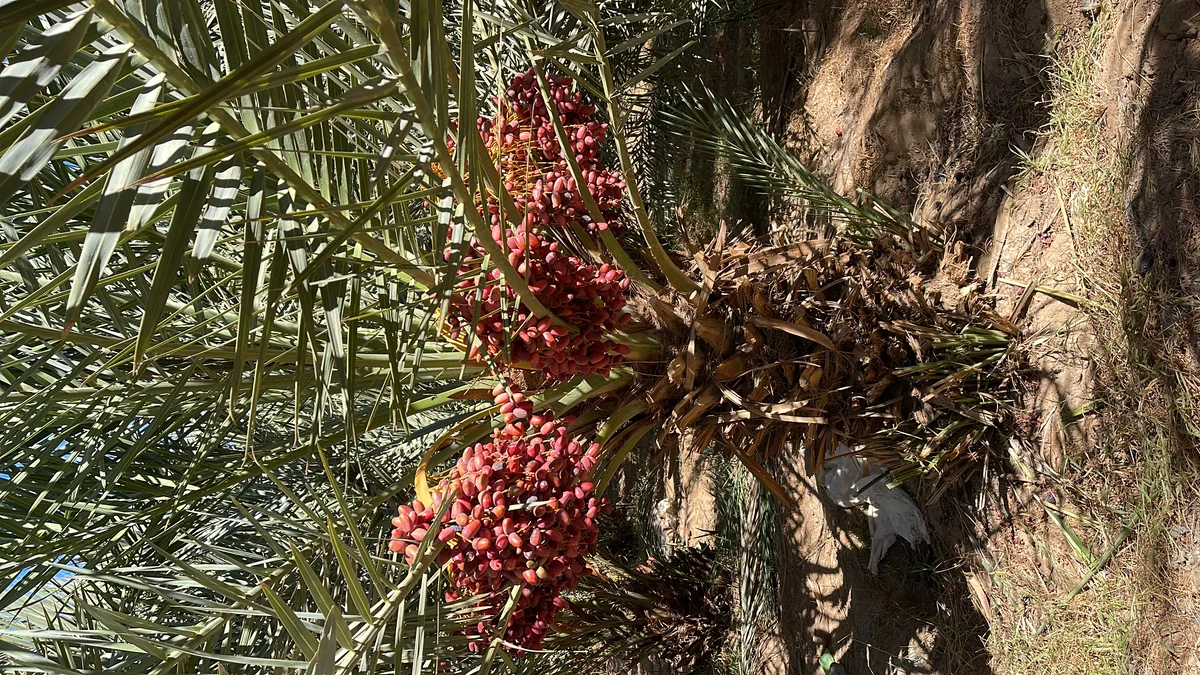
The palm groves of the southeast produce some of the world's finest dates. The large, soft Medjool (mejhoul) variety originated in Morocco's Tafilalet oasis, around Erfoud and Rissani, and many other local varieties are grown along the Ziz and Draa valleys. In autumn, after the harvest, markets overflow with them. Oases also produce figs, pomegranates, almonds, olives, vegetables and fodder in their shaded, layered gardens; read more in our guide to desert trees and oasis agriculture and on Erfoud.
Mint tea and hospitality
Green tea brewed with fresh mint and plenty of sugar is far more than a drink: it is the gesture of welcome that opens nearly every visit. The host pours it from a height to create a light froth, and glasses are traditionally offered in rounds, often three. Accepting at least one glass is polite; if you prefer less sugar, it is fine to ask. For more on the customs behind it, see our guide to Amazigh (Berber) culture.
Eating in the desert: practical tips and etiquette
- Wash your hands before eating; hosts often bring a basin and kettle to the table.
- Eat with your right hand, using bread to scoop food from the part of the shared dish in front of you.
- Pace yourself: in homes and camps, more food tends to follow, and hosts may keep offering.
- Dietary needs: vegetarian dishes are easy to find; mention allergies or other requirements to your camp or guide in advance.
- Alcohol is not widely available outside larger hotels, and it is respectful to drink discreetly, if at all.
- During Ramadan, many local cafés close during the day; eat discreetly in private and enjoy the evening meal that breaks the fast.
A night in a desert camp is often the best food experience of all: tagine served by lamplight, followed by music around the fire.